
NEWS & INSIGHTS · September 10, 2026
How to Choose the Right Carbon Fiber Pool Cue Shaft
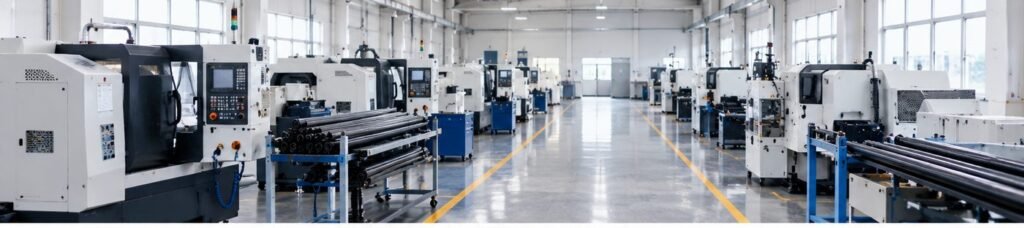
Choosing the right carbon fiber pool cue shaft can have a significant impact on accuracy, cue ball control, feel, and overall playing performance. With different shaft diameters, tapers, stiffness levels, joints, and tip configurations available, it is important to choose a shaft that matches your playing style and requirements.
This guide explains the key factors to consider when selecting a carbon fiber pool cue shaft.
1. Choose the Right Shaft Diameter
Shaft diameter is one of the most important factors when choosing a carbon fiber shaft. Common options include 10.5 mm, 11.5 mm, and 12.5 mm.
10.5 mm Carbon Fiber Shaft
A 10.5 mm shaft is a popular choice for players who prefer a slimmer profile and precise cue ball control. Its smaller diameter can provide a more delicate feel and is often suitable for players who prioritize precision.
11.5 mm Carbon Fiber Shaft
An 11.5 mm shaft provides a balanced combination of control, stability, and feel. It is a versatile option for players who want a modern carbon fiber shaft without going too thin.
12.5 mm Carbon Fiber Shaft
A 12.5 mm shaft has a more traditional appearance and feel. The larger diameter can provide additional stability and may be preferred by players who are accustomed to traditional wooden shafts.
Tip: There is no single diameter that is best for every player. The right choice depends on your preferred playing style, cue ball control, and personal feel.
2. Consider Low Deflection Performance
One of the major reasons players choose a carbon fiber pool cue shaft is its potential for low-deflection performance.
Deflection refers to the movement of the cue ball away from the intended direction when applying sidespin. Shaft construction, mass distribution, diameter, ferrule design, and tip configuration can all influence deflection.
A well-designed low-deflection carbon fiber shaft can help players achieve more predictable cue ball behavior, particularly when using English or sidespin.
When comparing shafts, look beyond the material itself. The internal construction and overall design are also important.
3. Check Shaft Stiffness
Shaft stiffness affects how a cue feels during the stroke.
A stiffer shaft can provide a solid and direct feedback, while a more flexible shaft may offer a softer feel.
Your ideal stiffness depends on your stroke and personal preference.
For players who prefer a powerful and stable stroke, a relatively stiff shaft may be a good option. Players who prefer a softer and more flexible feel may want to consider a different shaft construction.
4. Pay Attention to the Shaft Taper
The taper describes how the diameter of the shaft changes from the tip toward the joint.
A shaft with a longer or more gradual taper can provide a different bridge and stroke feel compared with a shorter or more aggressive taper.
When choosing a carbon fiber cue shaft, consider:
- Shaft taper length
- Tip diameter
- Overall shaft profile
- Bridge comfort
- Stroke preference
A comfortable taper can make a significant difference during long playing sessions.
5. Choose the Right Tip
The tip is another important component of the shaft.
Different tip materials and hardness levels can affect:
- Cue ball grip
- Spin generation
- Impact feel
- Sound
- Control
A softer tip may provide more grip and a softer impact feel, while a harder tip can provide a firmer response and longer durability.
The ideal tip depends on your playing style and personal preference.
6. Check the Ferrule Design
The ferrule connects the tip to the shaft and can influence the overall feel and performance of the cue.
When evaluating a carbon fiber shaft, consider the ferrule material, length, weight, and construction.
A properly designed ferrule can help achieve a balance between durability, stability, and performance.
7. Make Sure the Joint Matches Your Cue
Before purchasing a replacement carbon fiber pool cue shaft, make sure the joint is compatible with your cue butt.
Different cue manufacturers use different joint designs and dimensions. A shaft that does not match the joint specifications may not fit correctly.
If you are ordering a custom shaft, provide the manufacturer with the exact joint specifications whenever possible.
For OEM projects, manufacturers can also develop shafts according to the customer’s joint requirements.
8. Consider Shaft Length
Standard shaft lengths are commonly around 29 inches, but the appropriate length can vary depending on the complete cue configuration and player’s preference.
When choosing a replacement shaft, make sure its length works properly with your existing butt and desired total cue length.
For custom pool cue production, shaft length can be adjusted according to the target product specifications.
9. Look at Carbon Fiber Construction Quality
Not all carbon fiber shafts are constructed in exactly the same way.
Important manufacturing factors include:
- Carbon fiber material
- Fiber orientation
- Lay-up structure
- Molding process
- Curing process
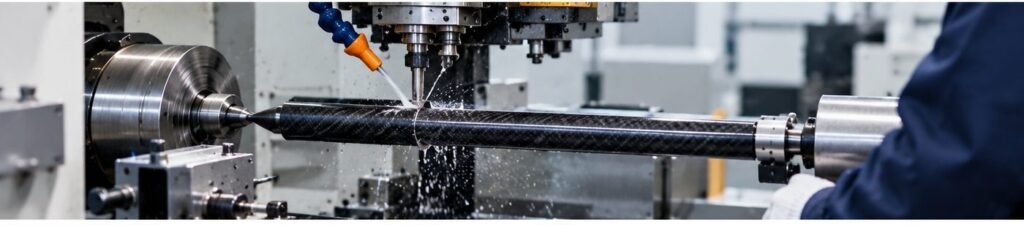
- CNC machining
- Surface finishing
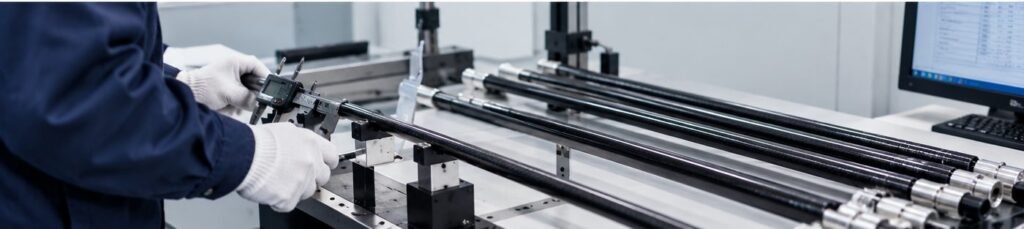
- Quality control
Consistent manufacturing is important for achieving stable dimensions and reliable performance.
For buyers sourcing shafts for their own brands, it is worth evaluating the manufacturer’s production capabilities rather than choosing a supplier based only on price.
10. Consider Your Playing Style
The best carbon fiber pool cue shaft is ultimately the one that matches your playing style.
Players who prioritize precision
A smaller diameter, such as 10.5 mm, may be worth considering.
Players looking for balance
An 11.5 mm shaft can provide a versatile combination of control and stability.
Players who prefer a traditional feel
A 12.5 mm shaft may be a more comfortable transition from a traditional maple shaft.
These are general guidelines rather than strict rules. Players should consider their stroke, preferred tip, shaft taper, and overall cue configuration together.
Carbon Fiber Shaft vs. Maple Shaft
Carbon fiber and maple shafts have different characteristics.
| Feature | Carbon Fiber Shaft | Maple Shaft |
|---|---|---|
| Material | Carbon fiber composite | Hard maple |
| Consistency | Highly consistent manufacturing | Natural wood variation |
| Moisture resistance | Generally high | More sensitive to moisture |
| Maintenance | Relatively low | Requires more care |
| Deflection | Can be engineered for low deflection | Depends on wood and construction |
| Customization | Highly customizable | Traditional customization |
Carbon fiber shafts are increasingly popular among players who want consistent performance, durability, and modern low-deflection designs.
How to Choose the Right Carbon Fiber Shaft
Before placing an order, consider these key specifications:
1. Shaft diameter – 10.5 mm, 11.5 mm, or 12.5 mm
2. Deflection performance – Consider how you normally use sidespin
3. Stiffness – Choose according to your preferred stroke feel
4. Taper – Make sure the profile feels comfortable
5. Tip – Select the appropriate material and hardness
6. Ferrule – Check its construction and dimensions
7. Joint – Confirm compatibility with your cue butt
8. Length – Match your desired total cue configuration
9. Manufacturer – Check production capabilities and quality control
Custom Carbon Fiber Pool Cue Shafts for OEM/ODM
For pool cue brands, distributors, and wholesalers, selecting a manufacturer with OEM and ODM capabilities can provide more flexibility.
A professional manufacturer can customize shaft diameter, length, taper, joint, tip configuration, appearance, and branding according to your requirements.
At Cheval Carbon, we support customized carbon fiber pool cues and shafts, including customized specifications, cue butt designs, and brand logos. Our manufacturing process covers carbon fiber forming, machining, finishing, assembly, and quality inspection.
For brands developing a new carbon fiber pool cue, providing technical drawings or detailed specifications can help the manufacturer develop a suitable sample before mass production.
Conclusion
Choosing the right carbon fiber pool cue shaft requires more than simply selecting a carbon fiber product. Shaft diameter, deflection, stiffness, taper, tip, ferrule, joint, length, and manufacturing quality all influence the final playing experience.
For individual players, the best approach is to choose specifications that match their stroke and playing style. For pool cue brands and distributors, working with an experienced OEM manufacturer can provide greater control over product specifications, design, and branding.
A well-designed and properly manufactured carbon fiber shaft can provide a consistent, durable, and modern option for players looking for reliable pool cue performance.