
NEWS & INSIGHTS · October 3, 2026
Carbon Fiber Pool Cue Joint Types: A Complete Guide
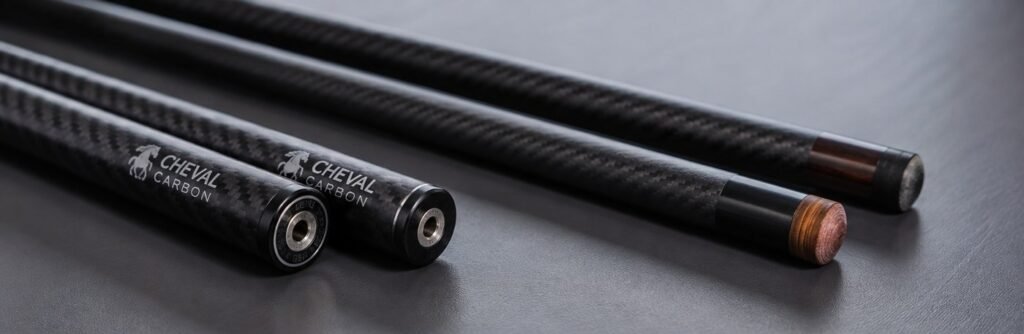
The joint is one of the most important components of a pool cue. It connects the shaft and butt, while also affecting assembly, stability, feedback, and overall cue feel.
For carbon fiber pool cues, choosing the right joint is especially important when developing custom cues, replacement shafts, or OEM products.
This guide introduces common carbon fiber pool cue joint types and explains what buyers should consider when selecting a joint.
1. What Is a Pool Cue Joint?
A pool cue joint is the connection point between the cue shaft and butt.
A typical joint consists of:
- Joint pin
- Joint collar
- Joint insert
- Shaft and butt connection surfaces
A properly manufactured joint should provide a secure connection while maintaining consistent alignment between the shaft and butt.
For manufacturers and B2B buyers, joint specifications should be confirmed before production begins.
2. Common Carbon Fiber Pool Cue Joint Types
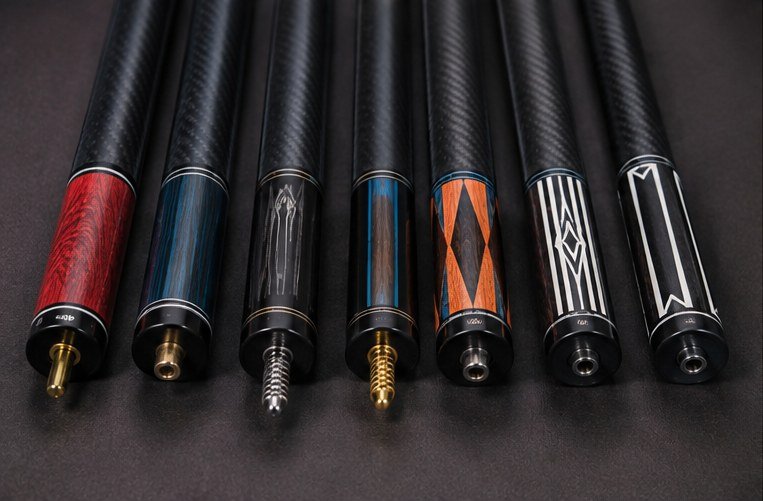
Different pool cue manufacturers use different joint systems. Some of the commonly seen options include radial joints, 3/8×10 joints, Uni-Loc-style quick-release joints, and other pin systems.
Radial Joint
Radial joints use a radial-style pin and matching insert.
Common characteristics include:
- Precise shaft-to-butt connection
- Stable installation
- Consistent alignment
- Suitable for custom cue production
The exact joint dimensions and insert specifications should be confirmed with the manufacturer before production.
3/8×10 Joint
The 3/8×10 joint uses a threaded pin with 3/8-inch diameter and 10 threads per inch.
It is widely used in custom pool cues and can be specified when developing compatible shafts or complete cues.
For OEM projects, buyers should confirm the exact pin and insert design because different manufacturers may use slightly different joint configurations.
Quick-Release Joint
Quick-release joints are designed to make cue assembly and disassembly faster.
They are commonly used by players who frequently change shafts or transport their cues.
Potential advantages include:
- Fast assembly
- Easy shaft replacement
- Convenient transportation
- Suitable for modern cue designs
When selecting a quick-release system, compatibility between the shaft and butt is essential.
3. Why Joint Compatibility Matters
A carbon fiber shaft cannot simply be matched with any cue butt.
The following specifications should be checked:
- Joint type
- Joint pin specification
- Thread specification
- Joint diameter
- Insert specification
- Collar dimensions
If the shaft and butt use different joint systems, they may not connect correctly.
For replacement shafts, buyers should provide the exact joint specification or send a sample for confirmation.
4. How Does the Joint Affect Cue Performance?
The joint is only one part of the overall cue construction, so its effect should be considered together with the shaft, butt, materials, and construction method.
A well-made joint can help provide:
Stable Connection
The shaft should remain securely connected to the butt during play.
Consistent Alignment
Accurate machining helps maintain proper shaft-to-butt alignment.
Consistent Feedback
Joint construction can contribute to the overall feel and feedback of a cue.
Easy Maintenance
A suitable joint system makes shaft replacement and cue assembly more convenient.
5. How to Choose a Joint for a Custom Carbon Fiber Pool Cue
For OEM and private-label projects, the joint should be selected according to the target market and product design.
Before production, confirm:
Joint Type
Decide whether the project requires a radial, 3/8×10, quick-release, or another joint system.
Shaft Compatibility
If you already have existing shafts or butts, the new components must use compatible joint specifications.
Material
Joint pins and related components can be produced using different materials and finishes. The choice should match the required durability, appearance, and product positioning.
Dimensions
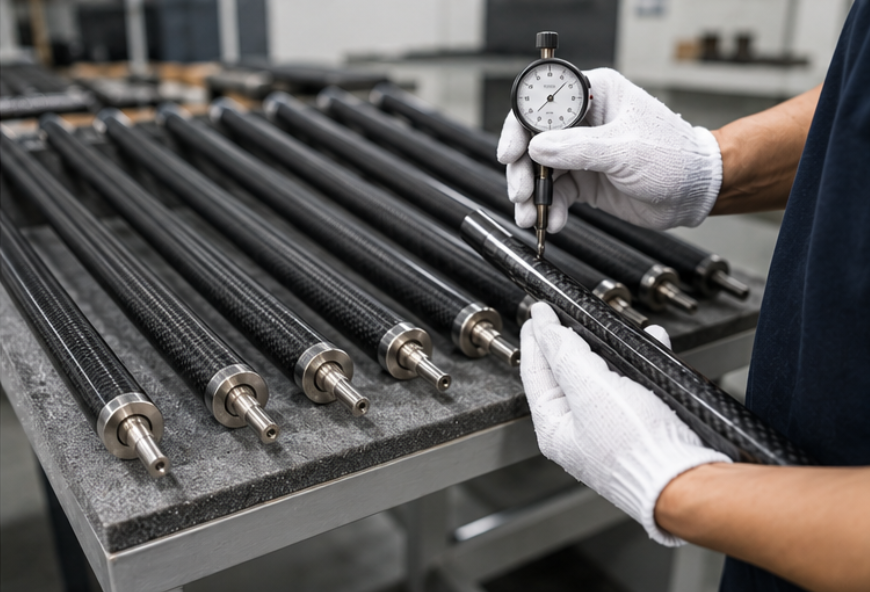
Important dimensions should be confirmed with technical drawings or physical samples before mass production.
Custom Design
For OEM projects, manufacturers can develop custom joint configurations according to the customer’s cue design and technical requirements.
6. What Should B2B Buyers Tell a Pool Cue Manufacturer?
When requesting a quotation for custom carbon fiber pool cues, providing detailed joint information can make the development process faster.
You can provide:
- Cue joint type
- Joint pin specification
- Shaft diameter
- Joint collar diameter
- Shaft length
- Butt length
- Reference samples
- Technical drawings
- Required quantity
If the exact joint specification is unknown, sending a physical sample or clear photos with measurements can help the manufacturer identify the required configuration.
7. Custom Carbon Fiber Pool Cue Joints
For OEM and ODM projects, joint specifications can be developed together with the shaft and butt.
A professional manufacturer can coordinate:
Joint Design → Shaft Production → Butt Production → CNC Machining → Assembly → Quality Inspection
This is particularly useful when developing private-label carbon fiber pool cues or replacement shafts.
Conclusion
Choosing the right carbon fiber pool cue joint requires more than simply selecting a joint pin. Compatibility, dimensions, shaft design, butt construction, and production requirements should all be considered.
For standard replacement shafts, matching the existing joint specification is essential. For OEM projects, buyers can work with a manufacturer to develop the joint, shaft, and butt as a complete system.
If you are developing a custom carbon fiber pool cue, providing the manufacturer with your joint specifications, drawings, or samples can help ensure accurate production and compatibility.