
NEWS & INSIGHTS · September 5, 2026
Carbon Fiber Pool Cue Shaft: Complete Buyer’s Guide
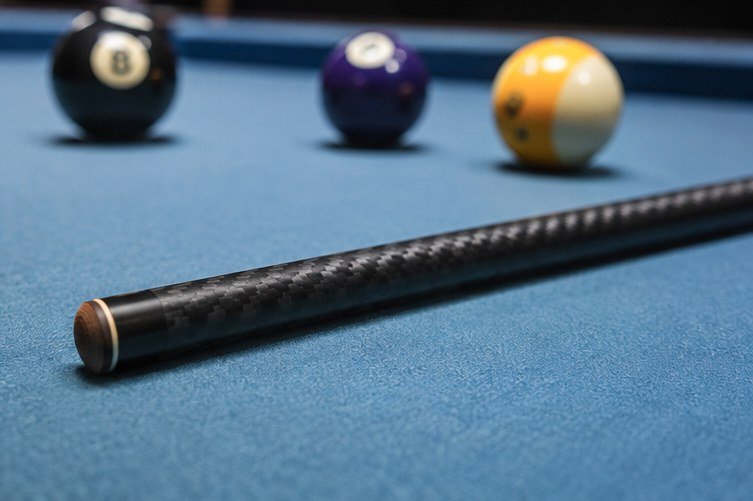
Choosing the right carbon fiber pool cue shaft can make a significant difference in your playing experience. Compared with traditional maple shafts, carbon fiber shafts are known for their consistent performance, low-deflection characteristics, durability, and resistance to environmental changes.
However, not every carbon fiber shaft feels or performs the same. Shaft diameter, taper, joint type, tip, stiffness, length, weight, and construction can all affect the way a cue feels in your hands.
This complete buyer’s guide explains what to look for when choosing a carbon fiber pool cue shaft and how to select the right configuration for your playing style.
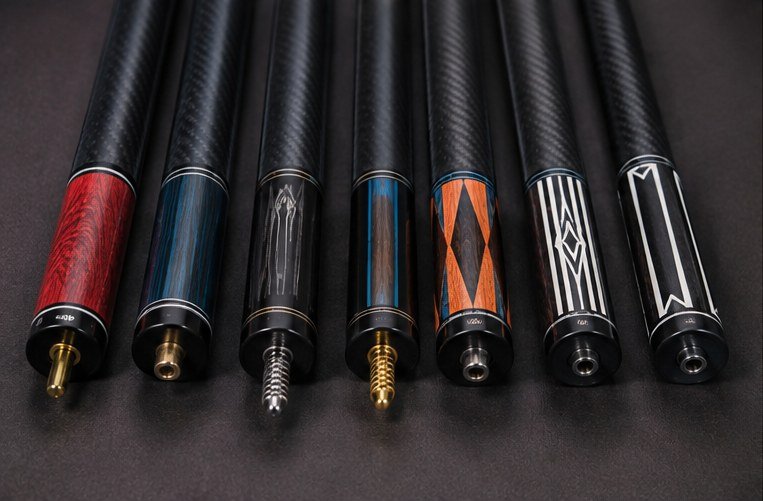
What Is a Carbon Fiber Pool Cue Shaft?
A carbon fiber pool cue shaft is the front section of a pool cue manufactured using carbon fiber composite materials instead of traditional maple wood.
Carbon fiber construction allows manufacturers to engineer the shaft’s stiffness, weight distribution, diameter, and taper more precisely. Many modern carbon fiber shafts are designed specifically to reduce cue ball deflection while maintaining consistent power and feel.
Carbon fiber shafts are also less susceptible to warping caused by changes in humidity and temperature compared with traditional wooden shafts.
For players who frequently use sidespin, draw, follow, and other English techniques, a low-deflection shaft can provide a more predictable response.
Carbon Fiber Shaft vs. Maple Shaft
The biggest difference between carbon fiber and maple shafts is their construction.
Maple shafts are made from natural wood, so their characteristics can vary depending on the wood grain, density, aging, and manufacturing process.
Carbon fiber shafts are manufactured from engineered composite materials, allowing manufacturers to control the shaft structure more consistently.
Carbon Fiber Shaft
- Low-deflection performance
- Consistent construction
- High strength and durability
- Excellent resistance to moisture and temperature changes
- Smooth surface
- Easy to maintain
- Suitable for modern playing styles
Maple Shaft
- Traditional playing feel
- Natural wood appearance
- Different feedback characteristics
- Familiar choice for many traditional players
- Can require more environmental care
Neither material is automatically better for every player. The best choice depends on your preferred feel, playing style, and performance requirements.
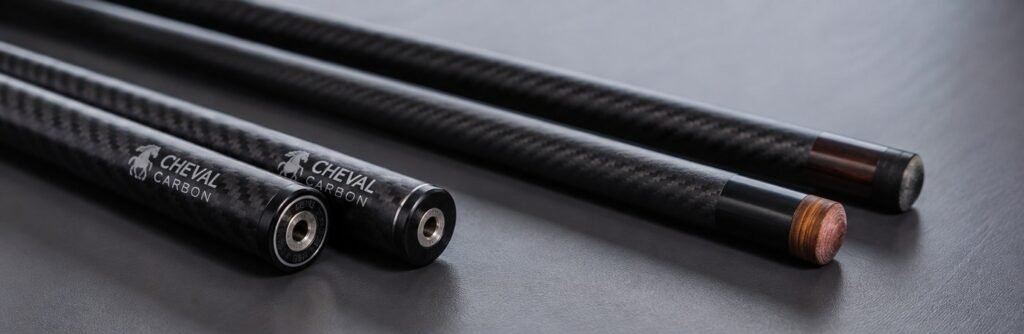
What Does Low Deflection Mean?
Low deflection is one of the most important reasons players choose carbon fiber shafts.
When you strike the cue ball away from its center while applying English, the cue ball can move sideways from the intended aiming line. This phenomenon is commonly referred to as cue ball deflection or squirt.
A low-deflection shaft is designed to reduce this unwanted movement, making it easier for players to predict the cue ball’s path when using sidespin.
Modern carbon fiber shafts are available in different diameters and construction designs specifically optimized for low-deflection performance.
However, low deflection does not mean that a player can completely ignore aiming adjustments. Stroke technique, tip contact, speed, spin, and the specific shaft design still influence cue ball behavior.
How to Choose the Right Shaft Diameter
Shaft diameter is one of the most important decisions when purchasing a carbon fiber pool cue shaft.
Common options include:
- 10.5 mm
- 11.5 mm
- 11.8 mm
- 12.0 mm
- 12.4 mm
- 12.5 mm
- 12.9 mm
Different manufacturers offer different sizes, but these diameter ranges are widely available in the current carbon fiber shaft market.
10.5 mm Shaft
A 10.5 mm shaft has a relatively slim front end.
It can appeal to experienced players who prefer a more precise, compact tip and a different bridge-hand feel.
Because the contact area is smaller, players may need good stroke consistency and tip control.
11.5–11.8 mm Shaft
This range offers a balance between precision and stability.
It is a popular choice for players who want a slimmer shaft without moving to an extremely thin configuration.
12.0–12.5 mm Shaft
A 12.0–12.5 mm shaft provides a more traditional feel and a larger tip area.
It can be a good choice for players transitioning from a traditional maple shaft or those who prefer a stable and forgiving setup.
12.9 mm and Larger
Larger shaft diameters can provide a more substantial feel and may appeal to players who prefer a thicker shaft.
The right diameter ultimately depends on your technique, bridge length, stroke, and personal preference.
11.5mm vs. 12.5mm Carbon Fiber Shaft
If you are deciding between 11.5 mm and 12.5 mm, consider the following:
| Feature | 11.5 mm | 12.5 mm |
|---|---|---|
| Front-end size | Slimmer | Larger |
| Feel | More precise | More stable |
| Tip area | Smaller | Larger |
| Transition from maple | Moderate | Easier |
| Suitable for | Experienced players | Beginners to advanced players |
| Playing style | Precision and spin | Versatile all-around play |
This does not mean that 11.5 mm is always better for advanced players or 12.5 mm is only for beginners. Experienced players use both configurations successfully.
The most important factor is finding a shaft that matches your technique and preferred feel.
Why Shaft Taper Matters
The taper describes how the shaft’s diameter changes from the tip toward the joint.
Common taper designs include:
- Pro taper
- European taper
- Conical taper
- Custom taper
A pro taper maintains a relatively consistent diameter through much of the shaft before gradually increasing toward the joint.
The taper affects how the shaft moves through your bridge hand and how the cue feels during the stroke.
A player who prefers a smooth, unrestricted stroke may prefer one taper design, while another player may prefer a more traditional or stiffer profile.
When choosing a carbon fiber shaft, don’t look only at the tip diameter. The taper should also match your bridge length and stroke style.
Shaft Stiffness and Playing Feel
Two carbon fiber shafts with the same diameter can still feel very different.
This is because shaft stiffness depends on factors such as:
- Carbon fiber construction
- Wall structure
- Internal core
- Shaft diameter
- Taper
- Front-end design
- Weight distribution
A stiffer shaft can provide a more direct and solid feedback, while a softer or more flexible design may feel closer to a traditional maple shaft.
There is no universally correct stiffness.
If you are replacing a maple shaft, choosing a carbon fiber shaft with a familiar taper and moderate stiffness can make the transition easier.
Choosing the Correct Joint
Joint compatibility is critical when purchasing a replacement carbon fiber shaft.
Common cue joint configurations include:
- Uni-Loc
- Radial
- 3/8 × 10
- 5/16 × 18
- Other custom joint systems
Different shafts are manufactured for specific joint systems, so you should confirm the joint type before placing an order.
Many carbon fiber shafts are available in multiple joint options. For example, current market offerings include Uni-Loc, Radial, and 3/8 × 10 configurations.
If you are ordering a custom shaft, provide the manufacturer with the exact joint specifications of your cue butt.
Don’t Forget the Tip
The tip is the part of the cue that directly contacts the cue ball, so it has a major influence on playing feel.
When selecting a carbon fiber shaft, consider:
- Tip diameter
- Tip hardness
- Tip material
- Tip shape
- Number of layers
- Replacement availability
A softer tip may provide a different grip and spin response, while a harder tip can provide a firmer hit and different feedback.
The shaft and tip should be considered as a complete system rather than two completely independent components.
Shaft Length and Weight
Most modern pool cue shafts are designed around standard cue dimensions, but shaft length and weight can still affect the overall balance of the cue.
When choosing a replacement shaft, consider:
- Shaft length
- Shaft weight
- Butt weight
- Balance point
- Tip diameter
- Joint construction
For example, a lighter front-end shaft can change the balance of your complete cue.
If you are replacing an existing shaft, it is better to compare the complete cue’s balance rather than choosing a shaft based only on its individual weight.
Why Carbon Fiber Shafts Are Popular
Carbon fiber has become increasingly popular among serious pool players because it combines engineered consistency with durability.
Key advantages include:
1. Low Deflection
Carbon fiber shafts can be engineered for low-deflection performance, helping players manage cue ball movement when applying English.
2. Consistent Performance
Engineered composite construction can provide more consistent shaft characteristics than natural wood.
3. Resistance to Warping
Carbon fiber is less sensitive to humidity and temperature changes than traditional wood.
4. Durability
A properly manufactured carbon fiber shaft can withstand regular playing conditions and does not require the same environmental care as a traditional wooden shaft.
5. Easy Maintenance
The smooth outer surface is relatively easy to clean and maintain.
How to Maintain a Carbon Fiber Pool Cue Shaft
Proper maintenance helps keep your shaft smooth and consistent.
Clean the Shaft Regularly
Use a clean, soft cloth to remove dust, chalk, oil, and dirt after playing.
Avoid Aggressive Abrasives
Do not aggressively sand or polish the carbon fiber surface unless the manufacturer specifically recommends it.
Protect the Joint
Keep the joint clean and use a joint protector when the shaft is not attached to the butt.
Avoid Extreme Conditions
Although carbon fiber is more resistant to environmental changes than wood, it is still best to avoid prolonged exposure to extreme heat, direct sunlight, or harsh chemicals.
Store the Cue Properly
A quality cue case can protect the shaft during transportation and storage.
How to Choose a Carbon Fiber Pool Cue Shaft for Your Playing Style
There is no single shaft that is perfect for everyone.
For Players Who Prefer Precision
Consider:
- 10.5–11.5 mm diameter
- Low-deflection construction
- A suitable pro taper
- A controlled, consistent tip
For All-Around Players
Consider:
- 11.5–12.5 mm diameter
- Medium stiffness
- Balanced weight distribution
- Versatile taper
For Players Transitioning from Maple
Consider:
- 12.0–12.5 mm diameter
- A familiar taper
- Moderate stiffness
- A comfortable tip
The goal is not simply to choose the smallest or lowest-deflection shaft. The goal is to find the combination that gives you the most predictable response.
What Should You Check Before Buying?
Before purchasing a carbon fiber pool cue shaft, check these specifications:
| Specification | What to Check |
|---|---|
| Material | Carbon fiber composite |
| Diameter | 10.5 / 11.5 / 12.5 mm or customized |
| Length | Match your cue setup |
| Taper | Pro taper or preferred design |
| Joint | Must match your cue butt |
| Tip | Size and hardness |
| Weight | Match your preferred balance |
| Deflection | Low-deflection design |
| Finish | Smooth and durable |
| Customization | Logo, color, joint and specifications |
| Manufacturer | Production capability and quality control |
Checking these specifications before ordering can help prevent compatibility problems and ensure the shaft matches your playing requirements.
Why Custom Carbon Fiber Shafts Are Becoming More Popular
For billiard brands, distributors, cue manufacturers, and professional players, standard shafts are not always enough.
A manufacturer with OEM/ODM capability can customize specifications such as:
- Shaft diameter
- Shaft length
- Taper
- Joint type
- Tip
- Shaft weight
- Surface finish
- Logo
- Packaging
This allows billiard brands to develop their own carbon fiber shaft products instead of simply reselling standard models.
For OEM buyers, it is also important to discuss sample development, production consistency, quality inspection, packaging, and shipping requirements with the manufacturer before starting mass production.
How to Choose a Reliable Carbon Fiber Pool Cue Shaft Manufacturer
When sourcing carbon fiber shafts, price should not be your only consideration.
A reliable manufacturer should be able to provide:
Manufacturing Capability
Look for a manufacturer with dedicated production equipment and experienced technicians.
Consistent Quality Control
Shaft diameter, straightness, weight, joint accuracy, surface finish, and tip installation should be inspected before shipment.
OEM/ODM Support
If you are developing your own billiard brand, the manufacturer should be able to support custom specifications and branding.
Sample Development
Before placing a large order, request samples to evaluate:
- Straightness
- Weight
- Diameter
- Taper
- Joint fit
- Surface finish
- Playing feel
Stable Mass Production
A good sample is not enough. The manufacturer should also be able to maintain consistent specifications during mass production.
Carbon Fiber Pool Cue Shaft for OEM and Private Label
For billiard brands looking to develop custom products, carbon fiber shafts offer significant customization opportunities.
You can develop shafts according to your target market, including different:
- Tip diameters
- Tapers
- Joint systems
- Shaft lengths
- Weight specifications
- Surface finishes
- Branding
- Packaging
At Cheval Carbon, we support customized carbon fiber pool cue products for brands, distributors, and professional billiard businesses.
Our OEM/ODM service can be developed according to your product specifications, logo requirements, and target market.
Frequently Asked Questions
Are carbon fiber pool cue shafts better than maple shafts?
Not necessarily for every player. Carbon fiber shafts offer advantages such as consistency, durability, and low-deflection performance, while maple shafts provide a traditional natural feel. The best option depends on your playing style and personal preference.
What is the best carbon fiber shaft diameter?
There is no universal best diameter. 11.5 mm is a popular choice for players who prefer a slimmer shaft, while 12.5 mm can provide a more familiar and stable feel. The correct diameter depends on your technique and preference.
Are carbon fiber shafts low deflection?
Many carbon fiber shafts are specifically engineered for low-deflection performance. However, the actual deflection characteristics depend on the shaft’s construction, diameter, taper, front-end design, and other specifications.
Can I put a carbon fiber shaft on my existing cue?
Yes, if you choose a shaft with a compatible joint. Always confirm the joint type and dimensions before ordering.
How long does a carbon fiber pool cue shaft last?
A quality carbon fiber shaft can provide many years of service with proper care. Its actual lifespan depends on playing frequency, transportation, maintenance, tip replacement, and general use.
Final Thoughts
A carbon fiber pool cue shaft is more than simply a replacement for a maple shaft.
The combination of diameter, taper, stiffness, joint, tip, weight, and construction determines how the shaft feels and performs.
When choosing a shaft, don’t simply select the smallest diameter or the most expensive option. Instead, consider your playing style, preferred feel, cue specifications, and long-term requirements.
For players, a well-matched carbon fiber shaft can provide consistent performance and predictable cue ball control.
For billiard brands and distributors, working with an experienced OEM manufacturer can provide greater flexibility in developing customized carbon fiber shafts for your market.
If you are looking for a custom carbon fiber pool cue shaft, send us your preferred diameter, length, joint type, taper, tip specification, quantity, and logo requirements. Our team can help develop a suitable shaft configuration for your brand or project.