
NEWS & INSIGHTS · October 13, 2026
Carbon Fiber Pool Cue Tip and Ferrule: Complete Guide
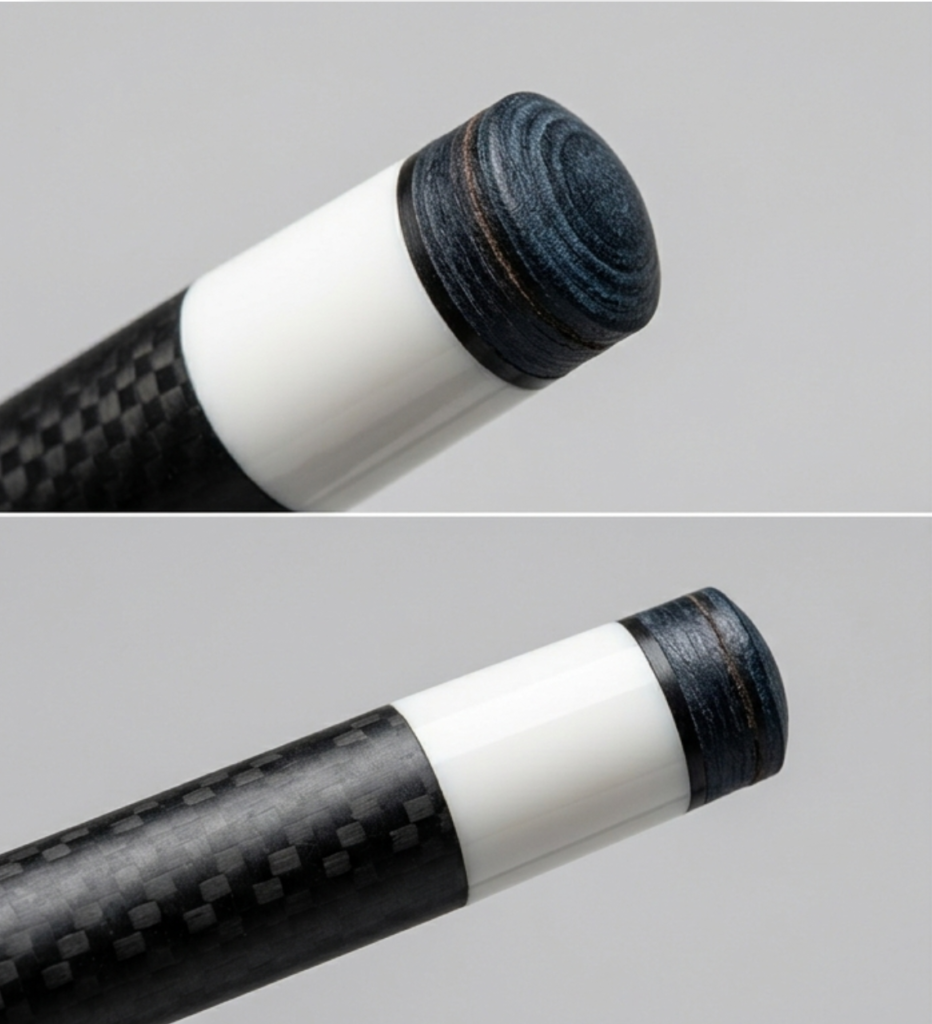
A carbon fiber pool cue is designed to deliver consistent performance, durability, and reliable cue ball control. However, the shaft material is only one part of the equation. The cue tip and ferrule also play important roles in how a cue performs.
Whether you are a pool player choosing a new cue, a billiard equipment distributor sourcing products, or a brand owner developing a custom cue line, understanding pool cue tip and ferrule options can help you make better purchasing decisions.
In this guide, we will explain the main types of pool cue tips and ferrules, common tip sizes, material differences, maintenance requirements, and important considerations when sourcing carbon fiber pool cues from a manufacturer.
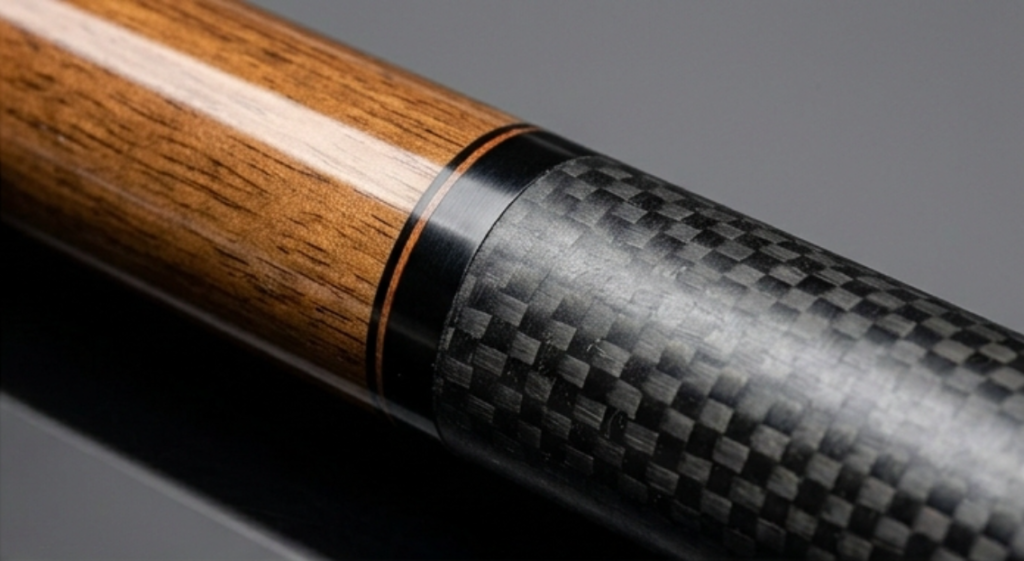
1. What Are a Pool Cue Tip and Ferrule?
The tip and ferrule are located at the front end of a pool cue shaft. Although they are small components, both contribute to the cue’s overall playing characteristics and durability.
What Is a Pool Cue Tip?
The pool cue tip is the small contact surface at the end of the shaft that strikes the cue ball.
Most playing cue tips are made from leather, including single-layer and multi-layer leather constructions. Different tips offer different combinations of grip, hardness, durability, and maintenance requirements.
A suitable cue tip helps players control the cue ball, apply spin, and execute shots consistently.
Common cue tip characteristics include:
- Softness: Softer tips generally compress more during impact and may provide a different feel and grip on the cue ball.
- Hardness: Harder tips tend to retain their shape longer and usually require less frequent maintenance.
- Layer construction: Multi-layer leather tips combine several layers to achieve particular playing characteristics and shape retention.
- Surface condition: Proper shaping, scuffing, and maintenance help the tip maintain consistent contact with the cue ball.
The best tip depends on the player’s stroke, preferred feel, playing style, and maintenance preferences.
What Is a Pool Cue Ferrule?
The ferrule is the component installed between the cue tip and the shaft structure, where a ferrule is used.
Its main functions include supporting the tip, protecting the shaft end, and contributing to the mechanical characteristics of the cue.
Ferrules can be manufactured from engineered polymers, fiber-reinforced composites, phenolic materials, and other materials selected for the intended cue design.
On carbon fiber shafts, the ferrule design must be compatible with the shaft’s construction. Some shafts use a separate ferrule, while others employ integrated or ferrule-less designs.
A ferrule should not be selected based on material alone. Its dimensions, attachment method, strength, and compatibility with the shaft are equally important.
2. Common Types of Pool Cue Tips
Pool cue tips are available in several constructions and hardness levels. Understanding their differences can help players and buyers select the right configuration.
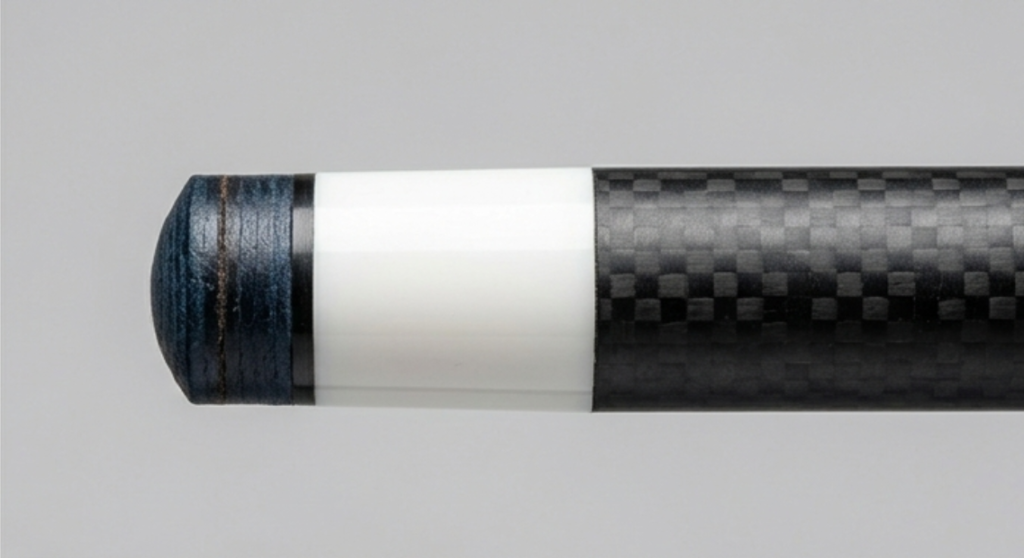
Single-Layer Leather Tips
Single-layer leather tips are made from one primary layer of leather.
They are a traditional option for pool cues and are available in different hardness levels. Their performance depends on leather quality, manufacturing consistency, and maintenance.
Potential advantages include a straightforward construction, familiar playing feel, and compatibility with many conventional cue designs.
Multi-Layer Leather Tips
Multi-layer leather tips are constructed from multiple bonded layers of leather.
The layered structure allows manufacturers to control the tip’s characteristics through material selection and production methods.
Potential benefits include consistent construction, good shape retention, and a range of available playing characteristics.
Multi-layer tips are widely used on modern playing cues, including many carbon fiber cue configurations.
Soft, Medium, and Hard Tips
Cue tip hardness is another important selection factor.
Soft tips
Soft tips generally compress more under impact. Some players prefer their feel when applying spin or playing touch-sensitive shots. They may require more frequent shaping and maintenance.
Medium tips
Medium tips provide a balance between compression, feel, durability, and maintenance. They are a common option for players looking for an all-around playing configuration.
Hard tips
Hard tips generally retain their shape longer and may require less frequent maintenance. Some players prefer their firmer response, although the actual feel depends on the complete cue construction.
There is no universally best hardness level. Players should consider their stroke, preferred feedback, and the type of shots they play most often.
3. Common Pool Cue Tip Sizes
Tip diameter is one of the most important specifications when choosing a pool cue shaft.
Common playing cue tip diameters include 10.5 mm, 11.5 mm, 11.8 mm, 12.4 mm, 12.5 mm, and 12.75 mm. Availability varies by manufacturer and cue model.
The correct diameter depends on the game, shaft taper, player’s preferences, and compatibility with the cue’s design.
10.5 mm to 11.5 mm Tips
Smaller tip diameters are often associated with specialist cue designs and players who prefer a slim shaft.
Potential advantages include a smaller contact profile and a different aiming and feedback experience. However, smaller diameters may require more precise tip placement and a consistent stroke.
Buyers should confirm that the tip diameter matches the intended shaft and ferrule specifications.
11.8 mm to 12.5 mm Tips
This range offers several popular options for modern pool cues.
Different diameters provide different visual profiles and playing experiences. The choice should account for shaft taper, cue ball control preferences, and the player’s familiarity with the equipment.
For manufacturers and distributors, offering multiple tip diameter options can help serve different customer segments.
12.75 mm and Larger Tips
Larger diameters are available on many traditional pool cues and other cue designs.
Some players prefer the wider profile because it feels familiar and suits their existing technique. Larger tips are not automatically more accurate or more forgiving, as performance also depends on tip curvature, stroke consistency, shaft construction, and contact point.
Important: Tip diameter alone does not determine cue ball deflection. Shaft construction, taper, end mass, ferrule design, and stroke technique also influence performance.
4. Common Pool Cue Ferrule Materials
Ferrule materials affect durability, weight distribution, manufacturing requirements, and playing feel. The most appropriate material depends on the intended application.
Engineered Polymer Ferrules
Engineered polymers are used in many modern cue designs.
Depending on the formulation, they can provide a useful combination of machinability, dimensional stability, and impact resistance.
For manufacturers, polymer ferrules can also offer flexibility in dimensions and production specifications.
Fiber-Reinforced Composite Ferrules
Composite ferrules combine a resin matrix with reinforcing materials.
Their characteristics depend on the reinforcement type, resin formulation, and manufacturing process. They may be selected when a cue design requires specific strength, weight, or structural properties.
Compatibility with the shaft is particularly important when using composite materials on carbon fiber cues.
Phenolic Ferrules
Phenolic materials are known for their rigidity and durability in suitable applications.
They are commonly associated with break cue and jump cue designs, although the exact configuration varies between manufacturers.
A hard phenolic component should not automatically be considered the best option for every playing cue. Material selection should match the intended use and overall cue design.
Integrated and Ferrule-Less Designs
Some carbon fiber shafts use integrated front-end structures or ferrule-less configurations.
These designs may reduce the number of separate components and allow manufacturers to optimize the shaft’s front-end construction.
However, not every carbon fiber shaft uses the same structure. Buyers should verify the specific design rather than assuming that all carbon fiber cues have interchangeable ferrules.
5. How the Tip and Ferrule Work Together
The cue tip and ferrule form part of the shaft’s front-end assembly. Their interaction affects both practical maintenance and the overall playing experience.
Several factors should be considered when evaluating this assembly.
Tip Diameter and Ferrule Diameter
The tip and ferrule should be dimensionally compatible.
The ferrule’s outer diameter is generally designed to align with the intended shaft profile and tip diameter. A significant mismatch can create an uneven edge or affect the appearance and finishing of the assembly.
Manufacturers should specify the finished dimensions clearly and verify them during production.
Tip Hardness and Playing Feel
Tip hardness influences compression during impact, but it should not be considered independently of the shaft and ferrule.
Two cues with identical tip hardness can feel different because their shaft construction, ferrule materials, front-end mass, and internal structure may differ.
Players should evaluate the complete setup rather than relying on tip hardness alone.
Front-End Weight and Deflection
The mass distribution near the tip can influence cue ball deflection when applying sidespin.
Ferrule dimensions, tip mass, shaft structure, and other design factors contribute to the overall front-end mass.
A lighter front end may support a low-deflection design, but removing material or changing components without considering structural requirements can compromise durability or alter the cue’s intended performance.
For this reason, replacement components should follow the shaft manufacturer’s specifications.
6. How to Choose the Right Tip and Ferrule for a Carbon Fiber Pool Cue
Choosing the correct configuration requires more than selecting a tip size or material independently.
Step 1: Identify the Intended Application
First, determine whether the cue is intended for regular playing, breaking, jumping, or another application.
Playing cues generally prioritize controlled contact and a suitable feel. Break and jump cues may require different tip hardness and front-end construction to withstand their intended use.
Step 2: Confirm the Tip Diameter
Choose a diameter compatible with the shaft and the player’s preferences.
If you are replacing an existing tip, measure the shaft and ferrule carefully. Do not assume that every shaft within the same nominal diameter uses identical front-end dimensions.
Step 3: Select the Tip Hardness
Consider the balance between feel, maintenance, and durability.
Soft, medium, and hard tips offer different characteristics. Testing a sample configuration can be useful when developing a new product or selecting equipment for a specific customer group.
Step 4: Check Ferrule Compatibility
Confirm the ferrule material, dimensions, attachment method, and structural design.
For carbon fiber shafts, it is especially important to follow the manufacturer’s repair and replacement recommendations. An incompatible ferrule or installation method may damage the shaft.
Step 5: Evaluate the Complete Assembly
Whenever possible, evaluate the assembled cue rather than judging the tip and ferrule separately.
Check the alignment, finish, dimensions, tip adhesion, and consistency of the front-end assembly. Playing tests can help assess whether the configuration meets the intended requirements.
7. Pool Cue Tip and Ferrule Maintenance
Regular maintenance helps preserve the cue’s condition and playing consistency.
Keep the Tip Properly Shaped
The tip should maintain an appropriate, consistent curvature. Use suitable shaping tools and avoid removing excessive leather during maintenance.
Inspect the Tip for Wear
Check for excessive flattening, loose layers, cracks, or separation from the ferrule.
A damaged tip should be repaired or replaced before the problem affects playability or causes further damage.
Check the Ferrule for Damage
Inspect the ferrule for cracks, chips, looseness, or visible separation.
If a ferrule is damaged, consult a qualified cue technician or the shaft manufacturer before attempting a repair.
Clean the Shaft Carefully
Use cleaning methods appropriate for the shaft’s finish and material.
Carbon fiber shafts often require different care from wooden shafts. Avoid harsh chemicals, excessive moisture, or abrasive materials unless the manufacturer specifically approves them.
Use Compatible Replacement Parts
When replacing a tip or ferrule, confirm the dimensions and installation method.
Incorrect machining, unsuitable adhesives, or excessive heat during repair may damage the shaft or affect the quality of the assembly.
8. OEM and Custom Pool Cue Tip and Ferrule Options
For distributors, wholesalers, and private-label brands, tip and ferrule specifications can be part of a broader product customization program.
Working with a manufacturer allows buyers to define the intended product configuration before mass production.
Common areas for discussion include:
- Tip diameter: Select from available shaft configurations according to the target market.
- Tip hardness: Specify the preferred soft, medium, or hard option.
- Tip construction: Choose a suitable single-layer or multi-layer design.
- Ferrule material: Confirm the material appropriate for the shaft and intended application.
- Front-end dimensions: Define the relevant diameters, lengths, and tolerances.
- Brand customization: Coordinate the tip and ferrule specifications with the wider cue design and branding requirements.
- Sample testing: Review prototype quality and playing characteristics before approving a bulk order.
Not every combination is technically suitable for every shaft. Custom specifications should be reviewed by the manufacturer to ensure compatibility, durability, and production feasibility.
At Cheval Carbon, we focus on carbon fiber pool cues, solid wood cues, and OEM/ODM customization for business customers. Buyers can discuss their intended market, shaft diameter, cue design, and branding requirements when developing a custom product.
For a more efficient quotation process, it is helpful to prepare the target tip diameter, preferred tip hardness, ferrule requirements, estimated order quantity, and any reference drawings or samples.
9. Common Mistakes When Selecting Pool Cue Tips and Ferrules
Avoiding common purchasing mistakes can help reduce compatibility problems and unnecessary maintenance.
Choosing by diameter alone
A matching tip diameter does not guarantee that the tip, ferrule, and shaft are compatible. The complete front-end design must be considered.
Assuming all carbon fiber shafts use the same ferrule
Carbon fiber shafts can use different front-end structures. Always confirm the manufacturer’s specifications before purchasing replacement parts.
Selecting hardness without considering playing style
A hard tip is not necessarily better than a soft tip. The appropriate choice depends on player preference, intended application, and the overall cue design.
Replacing components without checking installation requirements
Ferrule and tip replacement may require precision machining and appropriate bonding methods. Incorrect installation can damage the shaft or result in poor alignment.
Approving bulk production without sample inspection
For OEM and private-label orders, confirm the material, dimensions, appearance, and assembled product quality before approving mass production.
10. Frequently Asked Questions
What Is the Difference Between a Pool Cue Tip and a Ferrule?
The tip is the component that directly contacts the cue ball. The ferrule, when present, supports the tip and protects the front end of the shaft. Both contribute to the construction and playing characteristics of the cue.
What Is the Most Common Pool Cue Tip Size?
Many standard pool cues use tip diameters around 12–13 mm, while some modern carbon fiber shafts offer smaller options such as 10.5 mm, 11.5 mm, or 11.8 mm. The appropriate size depends on the cue design and intended use.
Is a Soft or Hard Pool Cue Tip Better?
Neither is universally better. Soft tips generally compress more during impact, while hard tips usually retain their shape longer. Medium tips offer an alternative for players seeking a balance between feel and maintenance.
Do Carbon Fiber Pool Cues Need a Ferrule?
Not necessarily. Some carbon fiber shafts use a separate ferrule, while others use integrated or ferrule-less designs. Always check the shaft’s specific construction before purchasing replacement components.
Can I Replace the Ferrule on a Carbon Fiber Shaft?
Replacement may be possible, but it depends on the shaft design and the damage involved. Carbon fiber shafts can require specialized repair methods. Consult the manufacturer or a qualified cue technician before attempting replacement.
Can I Customize Tip and Ferrule Specifications for OEM Orders?
Many manufacturers support selected customization options, depending on the shaft design, available materials, order quantity, and production requirements. Buyers should confirm technical feasibility and sample approval procedures before placing a bulk order.
Conclusion
Pool cue tips and ferrules are small but important parts of a cue’s overall construction. Tip material, hardness, diameter, ferrule design, and shaft compatibility all influence the finished product.
For individual players, choosing compatible components and maintaining them properly can help preserve a consistent playing experience. For distributors and private-label brands, clearly defining these specifications can improve product consistency and simplify quality control.
If you are developing a custom carbon fiber pool cue or sourcing products for wholesale distribution, working with an experienced manufacturer can help you evaluate available configurations, confirm technical compatibility, and prepare samples before mass production.
Contact Cheval Carbon to discuss carbon fiber pool cue specifications, OEM/ODM customization, and wholesale requirements.