
NEWS & INSIGHTS · October 8, 2026
Pool Cue Joint Types Explained: A Complete Guide
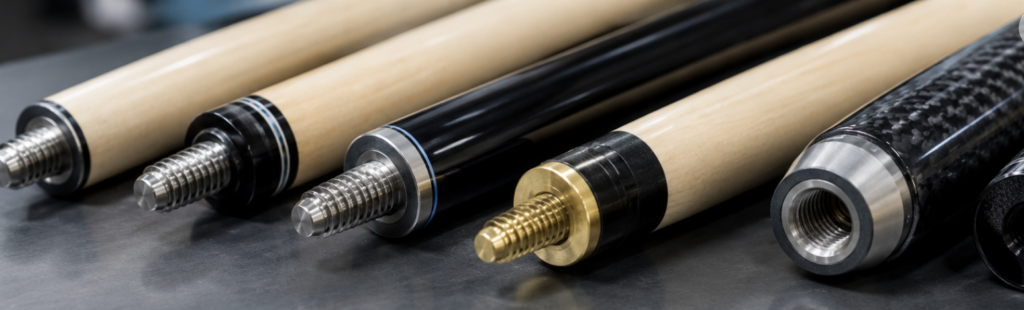
The pool cue joint is an important component that connects the shaft and butt of a two-piece pool cue. Its design affects assembly, alignment, connection stability, and the overall feel of the cue.
Different pool cue joint types use different pin designs, thread specifications, materials, and connection structures. Understanding these differences helps players choose compatible equipment and helps distributors and pool cue brands make better purchasing decisions.
In this guide, we explain common pool cue joint types, their advantages, compatibility considerations, and customization options for carbon fiber and wood pool cues.
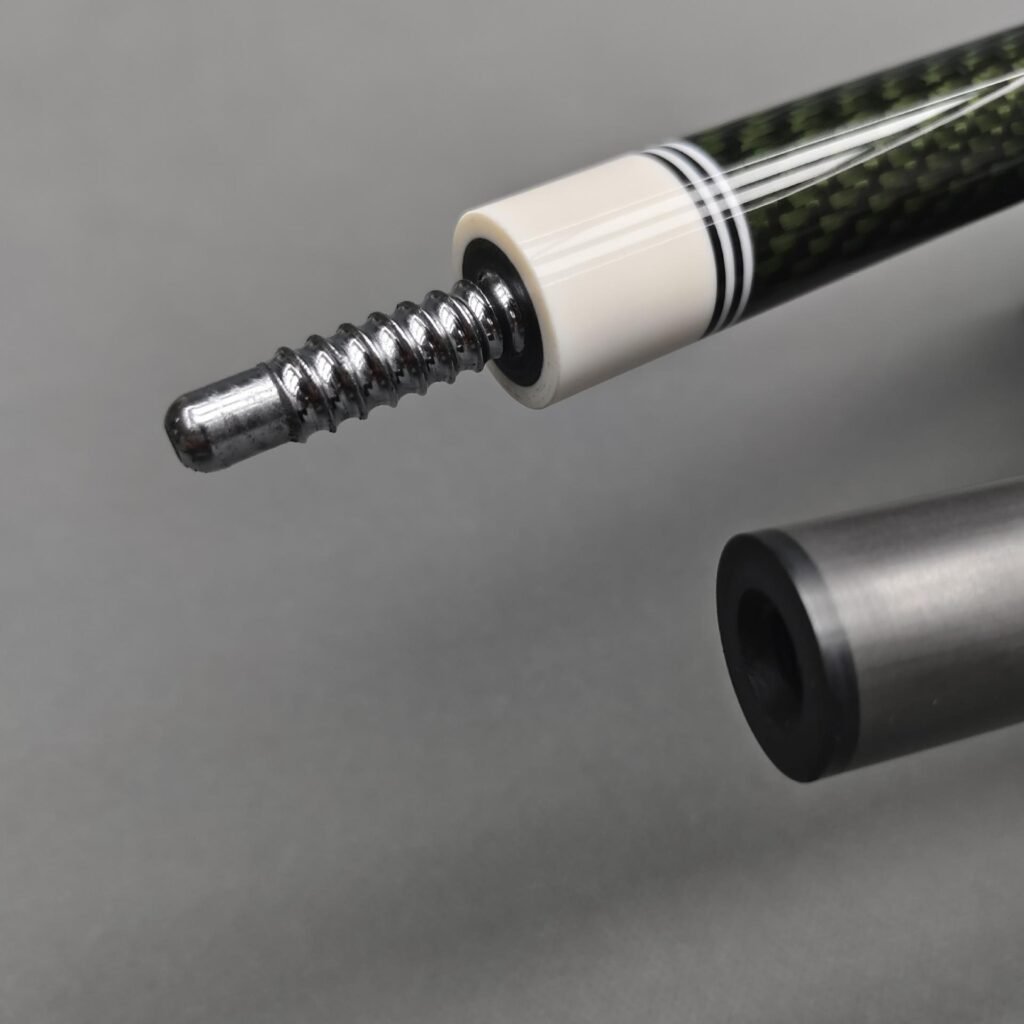
1. What Is a Pool Cue Joint?
A pool cue joint is the connection system between the shaft and butt of a two-piece cue. It generally consists of a joint pin on one section and a matching threaded or receiving component on the other.
The joint allows the cue to be disassembled for transportation, storage, and maintenance.
A well-designed joint should provide:
- Secure connection between the shaft and butt
- Consistent alignment during assembly
- Reliable fit with minimal unwanted movement
- Convenient assembly and disassembly
- Compatibility with the intended cue design
The exact joint structure depends on the cue manufacturer, model, and intended application.
2. Common Pool Cue Joint Types
Pool cues use several joint designs. The main differences involve the pin structure, thread specification, and connection method.
2.1 Radial Pin Joint
A radial pin joint uses a pin with a radial-style thread profile designed to provide a secure connection between the shaft and butt.
This type of joint is used in some performance-oriented pool cues. Its suitability depends on the manufacturer’s design and the matching joint components.
Key considerations:
- Correct thread profile and dimensions
- Accurate machining and alignment
- Proper fit between the mating components
- Compatibility with the intended shaft and butt
A radial pin should not be assumed compatible with other threaded joints simply because their dimensions appear similar.
2.2 3/8 × 10 Joint
The 3/8 × 10 joint is a commonly encountered pool cue joint specification. The designation generally refers to a nominal 3/8-inch pin diameter and 10 threads per inch.
The actual thread form and joint design should still be verified before matching components.
Key considerations:
- Pin diameter and thread specification
- Thread depth and engagement
- Joint material and surrounding structure
- Compatibility with the original cue model
When replacing a shaft or developing a custom cue, confirming the exact joint specification is essential.
2.3 5/16 × 14 Joint
The 5/16 × 14 joint is another joint specification found in pool cues. It generally refers to a nominal 5/16-inch pin diameter and 14 threads per inch.
Its compatibility depends on the complete joint design, not just the nominal dimensions.
Key considerations:
- Correct thread dimensions
- Matching receiving components
- Proper joint-face contact
- Accurate concentricity and alignment
Buyers should confirm the manufacturer’s specifications rather than relying on visual comparison alone.
2.4 Quick-Release and Multi-Thread Joints
Some pool cue designs use quick-release or specially engineered multi-thread connections to make assembly and disassembly more convenient.
The actual connection speed and number of turns depend on the specific design.
Potential advantages include:
- Faster assembly
- Convenient transportation
- Efficient product design for selected cue models
However, quick-release systems are not universally interchangeable. The shaft and butt must be designed for the same connection system.
2.5 Other Proprietary Joint Systems
Some manufacturers develop their own joint specifications for particular cue models or product families.
These systems may differ in pin geometry, thread profile, materials, or receiving structure.
For OEM and ODM projects, a proprietary joint can provide greater design flexibility. However, the specifications must be documented clearly to support future production, replacement parts, and quality control.
3. Pool Cue Joint Materials
The joint pin and surrounding components may use different materials depending on the cue design and performance requirements.
Stainless Steel
Stainless steel is used in some cue joint systems because of its strength and resistance to corrosion.
Its suitability depends on the design, dimensions, and intended weight distribution of the cue.
Brass
Brass can be used for selected joint components and machined fittings. It offers good machinability and is suitable for many precision component applications.
The final design should account for the required strength, wear resistance, and fit.
Other Metals and Engineered Materials
Some cue designs use other metals or engineered materials for the joint pin, insert, or surrounding structure.
The choice should be based on the complete joint assembly, manufacturing requirements, and intended use rather than material name alone.
4. Pool Cue Joint Compatibility: What Should You Check?
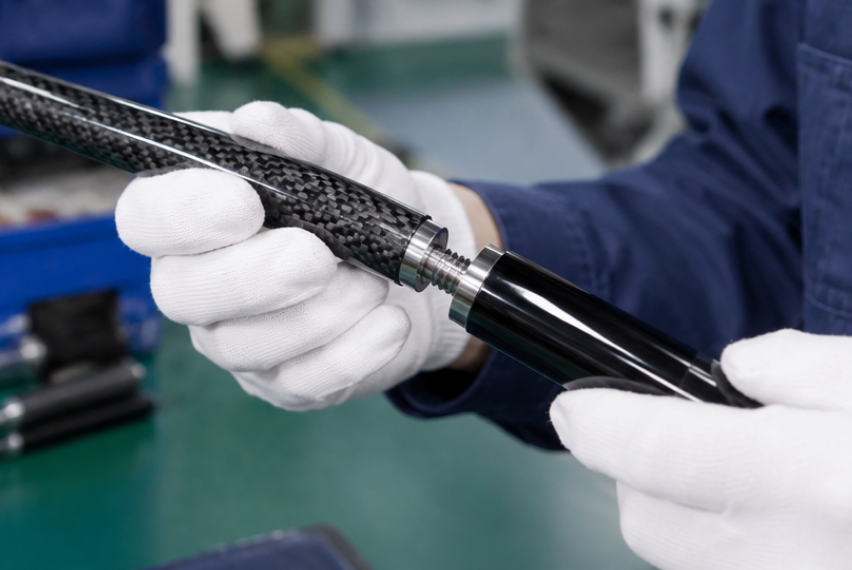
Choosing the correct joint is essential when purchasing a replacement shaft, developing a custom cue, or sourcing components from a manufacturer.
Pin Diameter and Thread Specification
Check the nominal pin diameter, thread pitch, and thread form. Two joints may look similar but still be incompatible.
Joint Length and Engagement
The pin length and thread engagement must match the receiving component. Incorrect engagement can cause poor assembly or damage the joint.
Joint Face and Insert Design
The mating faces and any joint collars or inserts should be designed to fit correctly. Contact surfaces and alignment influence the quality of the assembled connection.
Shaft and Butt Compatibility
A matching thread alone does not guarantee that a shaft will fit a particular butt correctly. Other dimensions, alignment, and structural details must also be considered.
Manufacturer Confirmation
When purchasing replacement shafts or custom cue components, provide the cue model, technical drawings, measurements, or a physical sample whenever possible.
Important: Do not force a joint that does not fit smoothly. Incorrect assembly can damage the threads or other components.
5. Pool Cue Joint Types for Carbon Fiber and Wood Cues
Both carbon fiber and wood pool cues can use different joint systems. The choice depends on the cue’s design, construction, and intended application.
Carbon Fiber Pool Cues
Carbon fiber cues require a joint design that integrates properly with the shaft structure and matching butt.
Important considerations include:
- Accurate joint dimensions
- Reliable bonding or mechanical integration, as applicable
- Consistent alignment
- Suitable material selection
- Repeatable assembly during production
For OEM projects, joint specifications should be confirmed early in the product development process.
Wood Pool Cues
Wood pool cues also use various joint designs. The joint must be manufactured to match the cue’s structure and intended performance characteristics.
Manufacturers should pay attention to machining accuracy, material stability, and the fit between the shaft and butt.
Can Carbon Fiber and Wood Cue Shafts Share the Same Joint?
Potentially, yes, if both components are specifically designed to use the same joint system and dimensions.
However, the material alone does not determine compatibility. The complete joint specification and structural design must match.
6. How to Choose the Right Pool Cue Joint
The best joint depends on your product requirements and purchasing goals.
Consider the following factors before making a decision:
- Compatibility: Confirm that the shaft and butt use the same joint specification.
- Connection stability: Check the quality of the fit and the consistency of the assembled connection.
- Ease of assembly: Consider how frequently the cue will be assembled and disassembled.
- Material requirements: Select suitable materials for the intended construction and operating conditions.
- Manufacturing precision: Ensure that the joint can be produced consistently within the required tolerances.
- Replacement availability: Consider whether replacement shafts and compatible components will be available in the future.
For distributors and brands, standardizing joint specifications across a product range may also simplify inventory management and after-sales support.
7. Custom Pool Cue Joint Solutions for OEM and ODM Projects
For pool cue brands and wholesalers, custom joint development can help meet specific product requirements.
A manufacturer may be able to customize joint dimensions, pin specifications, materials, and related shaft or butt components, depending on production capabilities.
Before starting an OEM or ODM project, buyers should confirm:
- Required joint type and technical drawings
- Pin diameter, thread specification, and engagement
- Material and surface finish requirements
- Shaft and butt dimensions
- Sample approval and testing procedures
- Quality inspection standards for mass production
A clear technical specification helps reduce compatibility problems and makes it easier to reproduce the approved design in future orders.
Working with an experienced pool cue manufacturer can also help buyers evaluate the feasibility of custom joint designs before committing to mass production.
Frequently Asked Questions
1. What is the most common pool cue joint type?
Pool cues use several joint specifications, including 3/8 × 10, 5/16 × 14, radial-style joints, and proprietary systems. The most appropriate choice depends on the cue model and manufacturer.
2. Are all pool cue joints interchangeable?
No. Joint pins may differ in diameter, thread pitch, thread profile, length, and other dimensions. Always confirm compatibility before replacing a shaft or butt.
3. Does the joint type affect pool cue performance?
The joint contributes to the assembled cue’s connection stability and overall construction. However, playing characteristics also depend on the shaft, butt, tip, weight distribution, and the complete cue design.
4. Can I customize a pool cue joint for my brand?
Many OEM and ODM manufacturers can accommodate selected custom joint requirements. Feasibility depends on the design, tooling, machining capabilities, and order specifications.
5. Can a carbon fiber shaft fit a wood cue butt?
It can if the shaft and butt are designed with compatible joint specifications and dimensions. The material difference alone does not determine whether they will fit.
Conclusion
Understanding pool cue joint types helps players, distributors, and manufacturers choose compatible components and develop reliable cue designs.
Radial-style joints, 3/8 × 10 joints, 5/16 × 14 joints, quick-release systems, and proprietary designs each have their own specifications and applications. The correct choice depends on compatibility, manufacturing precision, material requirements, and the intended use of the cue.
For custom carbon fiber or wood pool cues, confirming the joint specifications early can help prevent assembly issues and improve consistency during mass production.
Looking for a manufacturer for custom pool cues or OEM joint solutions? Contact Cheval Carbon to discuss your product specifications, customization requirements, and sample development needs.